
ShinyHunters Cybercriminal Gangs Threat Intelligence Report.

ShinyHunters remains a useful case study because the group shows how modern data theft rarely depends on one brilliant exploit. It depends on stolen access, weak identity controls, exposed data stores, fast monetisation, and public pressure.
et the complete threat intelligence report.
Get the complete threat intelligence report:
This summary distils the main investigative value of the ShinyHunters 2026 Threat Intelligence Report at a high level. It focuses on what the report suggests about attacker behaviour, likely investigative priorities, and the lessons defenders can apply without repeating sensitive operational detail.
At its core, the report frames ShinyHunters as more than a name attached to breach claims. It presents a pattern: a criminal brand built around access to large datasets, forum-based reputation, and the ability to turn stolen information into leverage. That makes the group relevant not only to incident responders, but also to legal teams, fraud teams, identity teams, and leaders responsible for risk.

The report portrays ShinyHunters as a data theft and extortion actor
The strongest theme in the report is that ShinyHunters’ impact comes from stolen data at scale. Unlike ransomware crews that often focus on encryption, this kind of actor is most dangerous when it can acquire, package, advertise, and sell sensitive information.
That difference matters. If an organisation treats every major cyber incident as a malware event, it may miss the earlier signs of harm. Many data theft cases begin with signs that look less dramatic:
Suspicious logins from unusual locations
Unexpected use of valid accounts
Unusual access to customer records
Large exports from cloud storage or databases
New API activity that does not match normal usage
Mentions of the organisation on criminal forums
The report’s investigative angle appears to place ShinyHunters within the broader ecosystem of cybercrime markets. In that ecosystem, a group’s technical ability matters, but so does its reputation. Criminal forums reward actors that can prove access, share samples, and convince buyers that stolen datasets are genuine.
That is why attribution can be difficult. The name attached to a leak may not reflect every person involved. One actor may gain access, another may extract data, another may broker the sale, and another may post the claim publicly. A mature investigation treats the name as one clue, not as the whole story.
The report also points towards a wider shift in extortion. Public breach claims, sample leaks, and buyer interest can create pressure even when systems remain online. The damage comes from exposure, fraud risk, regulatory scrutiny, and loss of confidence.
Identity abuse appears to be a central investigative thread
One of the most useful insights from a ShinyHunters-focused investigation is the importance of identity. Attackers do not always need to break through the front door if they can sign in with valid credentials.
The report’s likely investigative value sits in this area: mapping how access was obtained, how it was used, and how long it stayed active. For defenders, that means identity telemetry should sit close to the centre of any response.
Key questions include:
Which accounts accessed the affected systems?
Were any logins made from new devices, proxies, or unexpected regions?
Did the account use multi-factor authentication?
Were access tokens, session cookies, or API keys involved?
Did the user’s permissions match their role?
Were dormant accounts still active?
Did any third-party or contractor accounts have excessive access?
These questions sound basic, but they often uncover the path that matters most. A valid account with broad permissions can cause more damage than a noisy exploit attempt.
The ShinyHunters 2026 Threat Intelligence Report Summary and Key Investigative Insights also reinforces a practical point: access control is not only an IT issue. It is a business process issue. If joiner, mover, and leaver processes are weak, attackers gain room to move. If privileged access reviews are rare, old permissions become hidden risk. If cloud systems use long-lived keys, one exposed secret can remain useful for months.
A strong response requires more than resetting passwords after a breach claim. Teams need to review sessions, tokens, API keys, service accounts, OAuth grants, and integrations. In cloud and SaaS-heavy environments, those artefacts can matter as much as the password itself.
The report highlights the value of proving what was taken
A breach claim is not proof by itself. The report’s investigative lens appears to stress the need to verify what happened before making decisions.
For any ShinyHunters-related claim, the first question is not only “Did they breach us?” It is also “Can we prove what data they hold, where it came from, and whether it is current?”
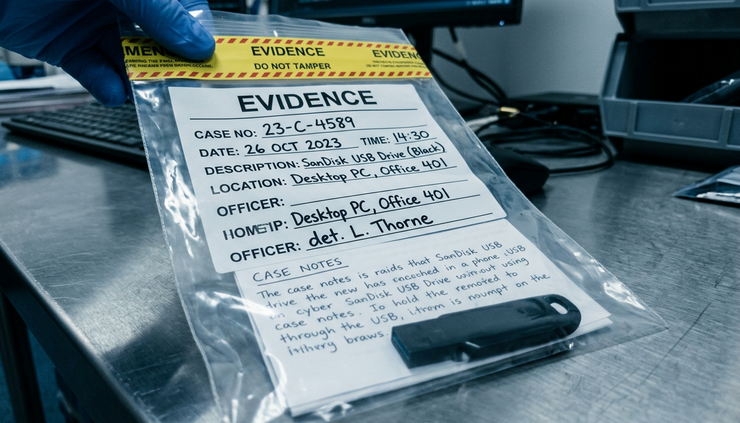
That requires careful evidence work. Investigators may need to compare posted samples with internal records, but they must do so safely and legally. They should avoid downloading unknown files from criminal spaces without controls. They should preserve logs, record timestamps, and keep a clear chain of custody.
The most useful evidence often comes from internal systems:
Evidence source | What it can show |
Identity logs | Login patterns, failed attempts, new devices, session activity |
Cloud audit logs | Storage access, exports, permission changes, key usage |
Database logs | Query volume, unusual reads, administrative actions |
Application logs | API calls, account enumeration, bulk downloads |
Endpoint records | Tools used, browser artefacts, credential access signs |
Network telemetry | Large outbound transfers, unusual destinations, timing |
This evidence helps separate several possible scenarios. A public leak may come from a current breach, an old breach, a third-party compromise, a recycled dataset, or a fabricated claim mixed with genuine samples.
That distinction matters. If a company assumes a dataset is new when it is old, it may waste time in the wrong places. If it assumes a claim is fake when samples are genuine, it may miss a live intrusion. The best response is measured, evidence-led, and fast enough to preserve logs before they expire.
The report also appears to reinforce the need for data lineage. Organisations often struggle to answer where a given record lives, which systems process it, and which third parties hold copies. Attackers benefit from that lack of clarity. If internal teams do not know where sensitive data sits, they cannot easily prove whether it was accessed.
Criminal marketplaces shape the impact of the group
ShinyHunters’ public reputation has been tied to the sale and disclosure of stolen databases. The report appears to treat this marketplace behaviour as a core part of the threat, not a side issue.
That matters because criminal forums do several things at once. They allow actors to advertise stolen data, recruit partners, build credibility, and increase pressure on victims. A post on a forum can fuel media attention, customer concern, fraud attempts, and copycat claims.
The investigative value comes from tracking the life of a dataset after theft. A dataset may appear first as a private sale, then as a sample, then as a public leak, then as material reused in phishing or credential stuffing. Each stage changes the risk.
For example, stolen customer information may create immediate privacy concerns. Later, the same data may help criminals craft targeted scams. If hashed passwords are involved, attackers may try to crack weak ones and reuse them against other services. If API keys or internal tokens appear, the incident may still be active.
This is why breach response should connect technical investigation with fraud monitoring and customer protection. A narrow focus on closing the initial access path may leave downstream harm unmanaged.
Useful follow-up actions include:
Watching for credential stuffing against related services
Monitoring for phishing that references the incident
Reviewing fraud patterns linked to exposed data fields
Notifying affected parties where required by law
Rotating secrets that may have been exposed
Reviewing third-party access and data-sharing agreements
The report’s broader message is clear: stolen data does not stop being dangerous once the intrusion ends.

Defensive lessons from the 2026 investigative findings
The report’s findings point to a set of defensive priorities that are practical and familiar, but still often underdone. The lesson is not to chase every new attacker name. The lesson is to reduce the conditions that make data theft easy.
Tighten identity controls
Multi-factor authentication should be treated as a baseline, but not as a complete answer. Stronger controls include phishing-resistant authentication for high-risk users, conditional access policies, short session lifetimes for sensitive systems, and alerts for impossible travel or unusual device use.
Service accounts need special attention. They often carry broad permissions and weak monitoring. Every long-lived secret should have an owner, a rotation schedule, and a clear reason to exist.
Limit access to sensitive data
Many incidents become severe because too many accounts can reach too much data. Least privilege is not a slogan. It should be visible in access reviews, role design, and default permissions.
High-value datasets should have extra controls. That may include tighter logging, access approval, data masking, query limits, export controls, and alerts for bulk access.
Improve logging before an incident
Investigators cannot reconstruct what was never recorded. The report highlights the importance of audit logs across identity providers, cloud platforms, databases, applications, and security tools.
Retention matters. Some breaches come to light weeks or months after the first access. If logs expire too quickly, the organisation may never prove what happened.
Build a breach-claim playbook
When a threat actor claims to hold company data, teams need a clear process. That process should cover verification, legal review, communications, evidence handling, regulator assessment, and customer impact.
The playbook should name decision makers in advance. It should also define who can engage with outside parties, who preserves evidence, and who approves public statements.
Treat third-party data risk as direct risk
Data held by suppliers, processors, platforms, and partners can still create direct harm. The report’s themes make this point especially relevant. If attackers obtain data from a partner, affected customers may not care which environment failed. They will care that their information is exposed.
Supplier reviews should go beyond questionnaires. Contracts need clear breach notification duties, logging requirements, access controls, and data deletion expectations.
What leaders should take from the report
The report’s main value is its focus on investigation rather than fear. ShinyHunters is a recognised name, but the larger lesson is about repeatable criminal methods.
Data theft groups thrive where four weaknesses meet:
Accounts can be stolen or reused.
Sensitive data is easy to find.
Large exports do not trigger enough scrutiny.
Breach claims create public pressure before facts are clear.
A good defence addresses all four. It reduces account takeover risk, maps sensitive data, monitors unusual access, and prepares the organisation to respond calmly when a claim appears.
There is also a communication lesson. Public breach claims can spread before an organisation has finished its investigation. Clear internal roles help avoid rushed or contradictory messaging. External statements should be factual, cautious, and updated as evidence improves.
The best response does not overstate certainty. It explains what is known, what is being checked, and what steps are being taken to protect affected people.

The key takeaway
The ShinyHunters report is most useful when read as a guide to how data theft operations work in practice. The group’s name may draw attention, but the lasting value lies in the investigative pattern: follow the access, verify the data, track the marketplace activity, and close the control gaps that allowed exposure.
For defenders, the next step is clear. Review identity controls, confirm logging coverage, map sensitive datasets, and test the breach-claim playbook before it is needed. The organisations best placed to handle ShinyHunters-style activity are not the ones that react the loudest. They are the ones that can prove what happened, act quickly, and protect people whose data may be at risk.


Comments